Showing posts with label Heroics. Show all posts

Wednesday, February 15, 2012

#58 -- "Metal Gear Solid 2: Sons of Liberty" Reviewed | * * *

BY THE WAY: An updated version of this review, and all of our other reviews, can be found on our new official site: http://www.ghostlittle.com/ No ads, no Google bullshit, just content. [Metal Gear Solid 2 Review]


"The illusion of control via the illusion of simulation."
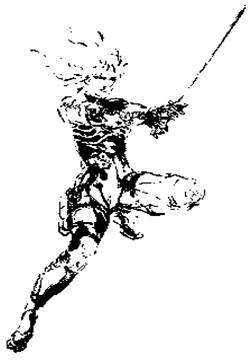
Before there was cleverness in videogames, there was cruelty. Metal Gear Solid 2 is a game made by Hideo Kojima, a man that doesn't like you. He doesn't you, he doesn't like his fans, he doesn't like making Metal Gear games over and over. He tried to quit a bunch of times, but then Japanese people rioted. He probably wanted to just produce games instead of directing, throw some good ideas at hungry developers so they could make things like Zone of the Enders (* * out of 4) or Castlevania: Lords of Shadow (* * * out of 4). He's an abstract and an "ideas man." He's too resentful to expect the player to understand his message when he speaks his mind within the context of a game. Kojima likes messing with people, offering a co-worker a handful of M&M's, and then laughing at them when they bit down on what were actually painted pebbles that he'd stayed up after lights-out to prepare. His is a character with no motivation -- he just does.

Whereas modern games actually plan on you discovering their gimmicks and secrets, probably at a designed-upon moment wherein you realize that this game is oh-so intelligent with its outlandish design, MGS2 is more of a drifter who is wise in his esoterica, burning down the Starbucks in every town he passes through. This game does not like chocolate chip cookies. This game is punk rock disguised as a Michael Bay movie. It's about an individual's overwrought sense of consumerist entitlement as much as it's about nuclear war -- and this is a videogame from 2001 that we're talking about. People have called it post-modern, but I think that's too broad of a definition. The original Metal Gear Solid on PS1 was already post-modern, which would make MGS2 a self-deconstruction, given its pronounced and purposeful similarity to its predecessor. It comes from a legacy and it knows it's famous. The original Metal Gear Solid made people sit up straight in their chairs in awe that a game could be about conspiracies and nuclear proliferation and real fuckin' guns firing real fuckin' bullets, all while still undoubtedly being a videogame in the same way that The Legend of Zelda was a videogame.

Kojima himself really did design a vast majority of MGS (source: The Game's Ending Credits), programming the enemy pathing, scripting boss patterns, and still writing and direction the abundant story. It was his. He had made this videogame and people played it, and they loved it madly. He had made so many people into videogame fans. Then he wondered if that was a good thing. Maybe he wondered if he'd been too clever, maybe he wondered if he hadn't been clever enough, but in the end, somebody had done a bad thing with MGS, simulating a one-man army sneaking into an Alaskan military base to thwart terrorists that were threatening innocents with a weapon as expansive and complex as nukes. The content was too serious for a media format like a videogame. It broke the fourth wall and established the player-character as an actual person, putting who was in control -- the player, the designer, or the character -- into question. Control and character would become major themes in MGS2. The videogame was becoming a squirmy art-form right before his eyes, and the battle-lines hadn't been drawn yet. Kojima wondered if people actually understood what they were interfacing with. He wondered if they could grasp the gravitas of such intricate, murderous role-playing.

The game was a success. It, along with Final Fantasy VII, helped establish the PS1's front-line. So how does an ego-maniacal idiot-savant like Kojima follow that up? How does he follow up Psycho Mantis? How does he follow up Revolver Ocelot's torture machine? How does he follow up Decoy Octopus, a boss hidden so deftly in his game that not everybody realized they fought and killed him during the first twenty minutes? How does one top that act? By doing the most punk rock thing imaginable. By nose-diving into his sophomore slump on purpose. By knowing his audience's expectations and doing almost the exact opposite. He knew he had one of the biggest audiences imaginable and that most everybody that would be buying MGS2 would have played, owned, or maybe even beaten MGS, and they were expecting big things for the sequel on the powerhouse PS2. Seriously, in 2000, a lot of people looked at the Dreamcast, and then looked at the preview build of MGS2, and instantly, a choir of angels descended from heaven to administer them God-sanctioned laser-eye surgery. It was no contest. Whatever was under the PS2's hood was lookin' pretty, pretty, pretty good, and all those kids suddenly recalled the rumors they'd heard from their friends with PS1's about how chocolate pudding-fantastic MGS was, which was that game with the robot ninja and nikita missiles that you could steer yourself.

PlayStation 2 it was. Sorry, Dreamcast. And the world waited with baited breath for the next generation.

Then 9/11 happened. It shouldn't be underestimated how much the real-life terrorist attacks soured people's feelings towards MGS2, a game about, hey, would ya know it, terrorists in New York. Or even worse, we were sure there were terrorists in the game, but we weren't sure what the game was actually about. It was murky as hell on purpose, all to make a statement about informational deception. MGS2 is not a cheerful game. It purposefully begins wholesome and familiar enough, barely informing you on how to operate old, familiar, Solid Snake, and it's business as usual, but it slowly drills down into the misery of modern American culture and how the government has been lying to us for decades. Yes, it's as jarring and hackneyed as that sentence. It had a labyrinthine plot laced with gray-shaded philosophical babble. Kojima always intended for the game to insult the player and nobody was in any mood to face an ironic videogame in October, 2001, especially when they were expecting Real American Hero Solid Snake to be kickin' bitches and slappin' robots.

Ah, yes, the Raiden twist. You are Raiden when you play MGS2, even during the parts where you control Snake during the initial Tanker-sequence that begins the game. You are Raiden. All of us are Raiden. Everybody that played MGS was Raiden and everybody that plays videogames is Raiden, at least as far as Kojima is concerned. And Raiden is not a very cool guy.

Snake is a cool guy. He prevented nuclear holocaust. He has a gruff voice and is named after a Kurt Russell character. He smokes. Smoking is "a move" that you can do when playing as Solid Snake. Raiden is none of those things. Raiden is an ignorant and androgynous bitch-whipped sucker. He limps through a a kabuki-theater plot surrounded by characters that act with as much enthusiasm as an underpaid babysitter wielding a Power Rangers action figure in one hand and a AT&T family-plan smartphone in the other.

And it's all on purpose. This is exactly what Kojima meant to happen. He saw his fanbase's desire to play as the iconic hero Snake and he saw an opportunity to twist it into a medium-defining moment. This is second-person storytelling. Remember earlier when I was talking about who was really in control, the player, the designer, or the character? No other storytelling form can do this.

It's simple. People use videogames as escapism, to simulate being a person greater and braver than ourselves. So what did Kojima do? He made a game where you get to play as a character trying to inhabit that role, but can't! You get to do it briefly, dabbling in the story's intrigue. You get to observe Solid Snake do his thang on occasion. But no, that stuff's going on outside of your control. When you take control of Raiden, you are talked through how things work by a patient military man, explaining your mission, how to walk, how to push a button, how to call your girlfriend on the phone, and this is all after you've infiltrated an US Marines' tanker not twenty minutes earlier. As Raiden, you are relegated to the back seat to make you learn that you are still playing a game, and when you're playing a game, you don't have the control you think you do. It's a harsh lesson. You, as Raiden, have to run through a plot of what is an admitted, deliberate simulation of the original Metal Gear Solid, which, in and of itself, was already a simulation of a Real American Hero stopping a terrorist attack. The illusion of control via the illusion of simulation. Only a videogame can do that. It attacks you for wanting to be guided through a simulation that you really have no control over, or even understand the reason for. And why, of all things, would you want to simulate this? What kind of sick psycho are you, choosing a narrow, digital, murder simulation? The story in MGS2 is a sad one. It's about us growing up, losing control, thinking we're doing good things, but we're puppets. We have no idea who to trust or who to depend on.

Kojima's stance on a sequel to MGS was: "Oh, what, you want another MGS game? Fuck you, you don't want another MGS game, and I'm gonna show you why. Because you, player, are a tool. A tool for me to manipulate. Defy me if you dare."

You (Raiden) trust your support characters blindly. You (Raiden) have your girlfriend leaning on your shoulder, giving vapid advice. You (Raiden) are a slave to a machine more complex than you could ever realize. You (Raiden) only become interesting when you become unlikable. Early on, Raiden encounters a man that looks and sounds exactly like Solid Snake -- who is supposedly dead, this man even admits it. Colonel Campbell, the voice in Raiden's ear, tells you not to trust this man that looks like Snake. But you know better. You've already identified with Snake. You trust Snake above all else. Immediately, you're put at unease, because you want to trust Campbell, but you know you should trust Snake, and that's when you first start to lose control of what you're doing. When Raiden comments that what's going on around him is a lot like The Shadow Moses incident of the first game, the supporting voices in his ear tell him not to worry about that, that, "This isn't a simulation, Raiden. It's real life," that's Kojima telling the player to be unsatisfied by this bullshit. The fact that the plot weaves Snake's presence, unaccounted variables that your supporting CO can't account for, is brilliant. Remember how Raiden is a doofy character with terrible dialog at first, and only the unaccounted variable characters like Snake, Olga, and Otacon, have decently-written parts and speak like actual people? That's because they exist outside of videogame conventions, and are free people, while Raiden (You) is just playing a part, doing as you're told. When it's revealed that Campbell was just an AI voice in your ear all along, and he tells you to stop playing the game, but you refuse, because fuck you, Old Man, that's you rising to Kojima's challenge to not obey authority, especially not a faceless game-designer. Once you've done this, you're ready to play the real game -- that game would exist elsewhere someday, and if Metal Gear Solid 3 (* * * * out of 4) had turned out to be terrible, then MGS2's joke wouldn't have worked, because with MGS3, Kojima proved that he could make a damn-fine game if he needed to.

It's the most important troll-job in videogame history. Kojima proved that he'd rather spend years of his life and millions of somebody else's dollars to tell a passive-aggressive joke about the state of a niche sector of the entertainment industry than let you play a cohesive videogame sequel to one of the most-revered games of all time. He designed a game that was deliberately as close to its predecessor as possible, but also deliberately not as good -- all to satisfy his own ego. It makes statements about sequels (they're shit), technological advancement (it's dangerous), entitlement (you aren't), and really new, interesting ideas (we're out of them, and we have been for a while).

MGS2 was a step towards the craziness that would eventually manifest in Metal Gear Solid 4: Guns of the Patriots, which is a towering monument to digital arts and crafts. The only problem with MGS2 is that it's not a very good game to actually play. Its design was clunky when it was released and it's aged horribly ten years later. The radar system is broken, there's no camera control, aiming is like digging yourself out of a snowbank with a bread knife, and the hand-to-hand combat is straight out of the 90's. It's important to note that that is not part of Kojima's joke. Rarely is a game so flawlessly built that it's actually about something, and still is fun to play.

The Nostalgianauts recommendation:
Revisit this game if it left a bad taste in your mouth all those years ago. A decade later, it's eerily prophetic, and even funny how much other games like Braid (* * * * out of 4) and Bioshock are playing catch-up with statements about player control (with some credit to System Shock 2, it's spiritual predecessor, but still). It sparked something philosophical in me when I first played it, even if I didn't quite understand why.

Nostalgianauts Rating: Was [WEIRD], Now [GREAT]!

* * *
(out of 4)

Recommended related reading:
[The Legend of Zelda: Majora's Mask | * * * ½] by Ghost Little
[ExciteTruck | * * * *] by Ghost Little
[Final Fantasy IX | * * * *] by Ghost Little


-- Alex Crumb
on Twitter | @GhostLittle_WTF

Tuesday, July 19, 2011

#14 -- "Paradise Lost" Reviewed | * * * *

"Paradise Lost has the balls to dissolve confusion, changing the topic of conversation from 'why?' to 'because, bitch.' It's a great piece of mythological fan-fiction. It's a great piece of persuasive advertising."

"Satan's actions are all the more identifiable given that there are quite literally no other humans to be found in the story at this point. He doesn't even know that he's evil though." 

"There's nothing about the contents of Hell in The Bible. It's woefully under-represented." 

". . .we suppose it's communication that is humanity's greatest survival tool. It fights the confusion. It's a tool for prosperity, for growth, for demonstration of intellectual prowess. When there is communication, there is stability, and when there is stability, there is great opportunity for freedom." 

"You're not afraid to leave this world because this world is negligent and it won't care when you're gone, and yet to identify with even one person and admit that you can't name every voice speaking in your soul, and to give over that responsibility in the face of absolute terror, that is the greatest persuasion." 

NB: This is entry #14. We've been working on it since the middle of February. Why? Because #14 is Paradise Lost, the greatest thing ever written. Not only did we need to do it justice, we got to writing about it, and left the computer for a bit, and then came back, and had an epiphany. Needless to say, in order to prove a point, we took our time and pledged months ago not to have this thing be "done" until July 19. That's today. Enjoy!

|  |  | 


We're huge admirers of actionbutton.net. Those guys have got it going on. Their freewheeling aggro-talk inspired a lot of what we do here. Our favorite feature of their site is that they are inclined to re-review things, sometimes more than once, and sometimes months or years later. What a concept! Imagine if we did this for the Academy Awards, for example. Did you know Shakespeare In Love won best picture? It did. Do you know what year it won in? Do you know what didn't win that year? Saving Private Ryan. Can you imagine if the evaluation system involved a re-review process 5 years later? Which of those two movies resonated further with audiences then, now, and a decade from now? Did you know Chicago won best picture? Over both Gangs of New York and The Two Towers.

There's a toxicity in our need for immediacy. It hinges on demand and on people's inability to make decisions for themselves. Make enough small bad decisions in a row, you lose yourself in your vat of errors, and incorrectness becomes unrecognizable. Sure, everybody has a right to accurate news though, to information, and to have it delivered in a timely fashion. It's when information blurs with consumption that things become clouded. We fear the day when all information and interpretation of events, both recent and ancient, are homogenized into a singularity, like the eventuality of Wikipedia. Information might one day be so ubiquitous and accessible that to be "intelligent" will become obsolete. People will be able to claim data and fact from the ether, its finality will be undisputed, and we all go Eloi (cruel irony, tell the people what Eloi are if they don't already know).

This in mind, we say delay immediacy. Slow your mental plow, man. Humans might like to think that their brains are solid-state hard drives. We aren't. We're better than that. What if we operated on a six-month delay of professional critique, analysis, and review? First, a lot of people would lose their jobs. We know we would, for sure.

This delay though -- would it add stability to our critical process? Is your gut reaction your best reaction? Well, write that down, but it won't be official for another six months under this system. Sleep on it. Think about it. Then forget about it. You'll go through a lot of days, moods, and interpretations over the course of that time. If you're doing your job correctly though, you'll arrive at the truest answer. You will always have your initial interpretation to fall back on if you can't discover anything else.

But what are we talking about again? Shit. How about that, four paragraphs and no mention of Paradise Lost, just ramblings about why we like actionbutton.net so much. Well, heads-up, this is probably the most importance sentence in the review, since it contains the statement, "Personal, prolonged justification in decision-making is a human's greatest capability, too often lost, and too often perverted, so when you attempt to cast off responsibility, you are also casting off self-worth, and that cuts you in a way that may never properly heal." Or maybe it's not the most important statement. We just riffed that without even looking down at the keyboard or taking a break to check email. Maybe we should write this over the course of six months? That'd be pretty righteous. Patience. We'll see what happens.

So we did.

Understand this: people lean. It makes us great. It's life-affirming and gives us worth. We slouch when we can't stand straight. We rest to collect our thoughts. We go to others when we need to verbalize. Rare is the person that doesn't shudder with fatigue. The other half of this webbed scaffolding we build around ourselves is that we don't quit. People, we mean. We don't lay down and die. There's always one last question we can think of, always one last thing we need to do, one last answer. The human soul runs on description and justification. 

In order to obtain description and justification though, we have to run on a crude fossil fuel: confusion. Paraphrasing Kierkegaard in limited vernacular, "The Bible is a simple book with a simple message, it's just that even the most intelligent man will deliberately refuse to understand it." The confusion powers us. Paradise Lost has the balls to dissolve confusion, changing the topic of conversation from "why?" to "because, bitch." It's a great piece of mythological fan-fiction. It's a great piece of persuasive advertising.

Confusion and rage power our protagonist in Paradise Lost. Beginning in medias res, as the best epics do, our hero is in trouble, annoyed after a fight with his father. It's some heavy shit. Family drama is the meatiest, most sticky drama. Because of the falling out, the kid has been sent to live in a crappy neighborhood with his equally confused friends. The electrical work in his new place is bad and the water damage makes the floors smell. The fight with his dad is rolling around inside his skull like a baker's dozen beetles with megaphones. In the beginning, he just wants to get what he did wrong. Our protagonist's confusion stems from his inability to understand the "why" of his father's displeasure. He felt he'd always done the right thing, admiring dear old dad, talking him up to people he met -- seriously, that's why we're here, right? To make our parents look good? And isn't out-doing them the best way to make our parents look good? 

The answer was apparently "no." This confused the living shit out of our hero. It started a fight and it came to blows. The hero left, sad, angry, violent, upset. He went to bed mad. He doesn't quit. There's always another question, the need for another answer. Approach a bad situation with both eyes open. If you don't like where you're at, change it. Good lessons for all people. 

The biggest problem is that our hero isn't "people." He isn't even human -- he's an angel, and a fallen angel at that. Our snap-judgment kicks in immediately when we're told the most ancient "oh, he'll be bad" red herring drops. Still, we're so compelled to side with him. Now, we've always been told that God created the angels to be different from humans. How different? Well, we were never really told that, the mythology's fuzzy. Yet they are seen as pious, pitying creatures, protecting earth-dwellers. There are no rules about how they "should" behave. In fact, the only rule is that God loves humans more than angels. 

Period. 

Angels get their wings and their halo and they get that one hard and fast rule. Paradise Lost is the story of the first angel to ask why that is. Worse still though, our fallen angel hero might be central to the story, but his struggle isn't the reason for this story. With that in mind, we readers already know there's no way in hell that he'll get the closure he demands. We know how the Genesis story ends. He doesn't know that yet, so the tragedy stems from the reader knowing before the hero. Also, he isn't a hero, he's an anti-hero. Eventually, he'll grow up to be The Prince of Darkness, Ruler of Hell, once called Lucifer, Satan now. He's a charming piece of work, sympathetic and seductive, and wicked to the core without even realizing it. 

He's the most human character in the story. Definitely easier to identify with than the actual humans. "Humans" and "humanity" are new concepts at the beginning of the story. Lucifer knows they exist and he knows that they've got a deluxe apartment in the sky. He does not. He's in Hell. It's pitch black, it's fucking hot, there are lakes of acid, and he just got his head stoved in by Michael, that kiss-ass punk. A lot of people don't get that. Lucifer was an, and is, an angel. He'll never be stronger than God. He's got the mystical firepower of some mid-level entity like Michael or Gandalf. So the next time you want to claim Satan-induced weakness or insanity, remember that Lucifer was a fairly weak spirit. 

Lucifer decides he should wreck all the nick-knacks hanging on the wall in God's den. We've all been there, it's a reasonable reaction. Satan's actions are all the more identifiable given that there are quite literally no other humans to be found in the story at this point. He doesn't even know that he's evil though. Those are the best villains. Ones that are true believers in their missions. They see themselves as wronged, as righteous, or as so disconnected from good and bad that what they're doing as malevolence. 

Top 10 villains of all time:
  1. Iago, from Othello
  2. Kefka, from Final Fantasy VI
  3. The Operative, from Serenity
  4. Ozymandias, from Watchmen
  5. Aton Chigurh, from No Country For Old Men
  6. Michael Corleone, from The Godfather Part II
  7. Stringer Bell, from The Wire
  8. Mary Tilford, from The Children's Hour
  9. Satan, from Paradise Lost
  10. Kerrigan, from Starcraft
So Satan isn't 'evil.' Or rather, we have no way to actually label Lucifer, the character, as evil. He hasn't done it yet. We know he will. We will always know how the story ends. This is good drama, children. Make the lead sympathetic, make him charismatic, make him wronged in a very human way, make his downfall predestined, then blind him of it. Make the reader hope for him. We hope for redemption, always. What a weird quality -- hearing this story about a guy that's supposedly the embodiment of all evil in existence, and we want to forgive him, want him to be redeemed. Says something about people's hearts being in the right place. The most popular religions are founded on that belief -- the eventuality of redemption. Out of our confusion, there is hope. Eventually. 

Hope will deliver us from confusion? Wishful thinking. Lucifer is an action-man! When others would wallow, he tells his bros that he's gonna go totally sick-house on God's favorite creation: mankind. OK, if you're a human reading the story, at this point, you can't abide that. "No, Lucifer, don't do it! You're going to get God mad at you and you'll be turned into a snake forever! Watch out, it's a fucking trap!" You can't save him. You have to watch him. Watch him and know that his suffering will teach you a lesson. It will teach you, human, the lesson of: "Why God acts the way he does around you."

Why do bad things happen to good people? Why is there disease? Why do we experience confusion? Why do we experience heartbreak? What is the purpose of giving us free will and then demanding obedience? Why is power given to those who do not know its value?

What is the purpose behind the ways of God to man?

An amazing hook. Everybody grapples with why others act a particular way toward a particular person. Everybody grapples with God, especially atheists. We at What's That From? believe in a non-systemic beliefs system. It's paradoxical and contradictory, like all religions, so it still counts. We don't align with a political party. We rarely vote. We don't believe in a specific god. We don't read a specific book when we feel confused, except maybe The Alchemist. We can understand why people would, but the idea of taking advice from something written, translated, and re-written by a loosely-assembled cult of malnourished, dehydrated, hallucinating, persecuted, angry desert-dwellers that blame another loosely-assembled tribe of malnourished, dehydrated, hallucinating, persecuted, angry desert-dwellers for killing their ret-conned messiah -- it just doesn't sit right. Seriously, ask any Christian, for example, why he or she believes in God. The good ones -- and they do exist -- will answer that they enjoy guidance, or they enjoy the communal betterment the church can bring, or they're trying to nail the organist. 

Then there are the funny ones. They might say something like, "because Jesus will save me." Jesus. The guy from The Bible? OK, we'll ignore that for a sec. What's Jesus going to save you from? "He's going to save me from the devil and get me to Heaven." 

Let's start here. The devil? You mean Lucifer. The prideful angel that stepped out of line in 1337 BC (not the actual year), confused about God's immediate and unexplained love for his second children? Why does God love us more than the angels, by the way? We're getting to that, that's what Paradise Lost explains, dummy! Anyway, the devil runs Hell, and that's where the people that Christians hate go when they die. Man, religion truly is a dish best served cold. Good to know that the motherfuckers of the world will be shot with acid-filled paintballs for, like, forever. Forever is longer than a human mind can fathom, maybe even longer, so they'll get theirs, don't you worry! 

What's Hell like? Well, any well-educated man of God will begin by describing the Circles. And the layers of sins. And the homunculi that torture the exposed flesh of the wicked. And the things that are done to people in their personalized Hellzzz, and how Satan is chained in the deepest frozen circle with three different heads that constantly masticate on the undying remains of the worst sinners in Christian mythology. 

Spoiler: these circles of Hell, the personalized sin-spas that the heathens are hot-tubbing in, these things do not appear anywhere in The Bible. You are thinking of The Inferno cantos from Dante Alighieri's Divine Comedy. You'd be just as well off reading The Canterbury Tales or Hyperion if you're looking for realizations of Hell. There's nothing about the contents of Hell in The Bible. It's woefully under-represented. The people (characters) in The Bible might refer to Hell on occasion, but what this is saying to us is that the people (characters) in The Bible have no idea what they're talking about. Which means all of their threats are empty. Which means their stories might be exaggerated for dramatic effect, ideally scaring readers into believing them, put there for dramatic effect. Which means they were making it up as they went along. The fact that committees were formed to decide which version of the Revelation story was to be canonized worries us. 

It doesn't matter though. All confusion over religion can be washed away by Paradise Lost. All the annoying fear-mongering and condemnation -- gone.

We are at a strange place in history. We're on a technological launching pad, yet we're still fighting wars circulating around religion and interpretation. Hatred hold-overs because of fear and confusion.

The good technologies in human history were born out of necessity, created for the betterment of the human condition. Consider America as an easy-to-follow example. Are you American? Don't answer that. Welcome, non-American reader!


See, cities needed power, so complex coal mines were developed to fuel growing metropolises. Anybody that says London is foggy doesn't know what they're talking about -- that Dickensian fog they're always talking about is actually coal soot, not actual fog. Always was. Nevertheless, the filth and squalor of early mega-cities brought overpopulation. Overpopulation led to people moving west, railroads systems were crafted. America needed food, invented massive agricultural machines to feed the baby boom after World War II. Pride in one's family lead to expansion, big cars, big houses, big yards, big dreams. Men in particular would say things about themselves without even speaking, poetry, truly, in that pride, pride's the two-faced composition notwithstanding, naturally. Needed to prove themselves, so they bought these things. Still, populations and sub-cultures were established all across the country -- trains too slow, flight industry exploded. Still not fast enough, telecommunication networks were built, people drawn even closer together -- closer still with the speed high-fidelity broadband connections allowed. The concepts of day and night on the planet are nearly negated due to the speed at which humans can communicate today.

There was always a necessity. Always a need. Sometimes for business, sometimes for survival. Always for speed though. The rate at which a human life can be extinguished is lessened with the speed at which one human can communicate with another. Therefore, we suppose it's communication that is humanity's greatest survival tool. It fights the confusion. It's a tool for prosperity, for growth, for demonstration of intellectual prowess. When there is communication, there is stability, and when there is stability, there is great opportunity for freedom. Freedom from time leads to exploration and wonderment, stimulation, and ways to specifically spend the free time that cooperation afforded.

Cooperation, then speed, then communication, then freedom, then stimulation -- art. Expression of existence. Replication of existence. Interpretation of existence. Go read Chapter 4 of James Joyce's A Portrait of the Artist as a Young Man. It'll change your life. It'll make you want to buy a dead poet's ashes off of eBay, chop them on a mirror, and do a few lines of an Irishwoman named Angela.


This art will become beauty and reflection. It is still a result of necessity. Human communication's final form is a desire, a necessity, even, perhaps, to convey presence at all times to others. To say without saying, again, is poetry. Yet, when presence becomes omnipresence, it is no longer felt, only its absence is felt. Anything less is inadequate. It can't be maintained, and we should not desire it to be maintained. At which point, we must assume that fluctuation, rising and falling and rising again, is the best communication, the best art, the best freedom, the best stimulation, the clearest expression of existence.

Existence, as humans define it. Buddha said that life is suffering -- we say think that thought is incomplete.

We think there has to be way more than people are aware of. For example, X-rays exist. We can't feel them, but we know they're there. We know they're capable of penetrating our reality, our level of perception -- it just takes a lot of technology and perception. So what else is there? There might be life-forms whose existence we might not even count as alive.

That which serves in symbiosis, aware that it will someday fall apart, will be the proudest. Sound like anybody named Satan that you've heard of? There may perhaps never be another like him, rebel angel that he is, and he knows it, so his uniqueness is a keystone to his expression. Utter individuality simultaneously manages to be just as inadequate as omnipresence, for it is in utter individuality that weakness is bred. It's here that the proudest, which we mentioned above, shows its true colors. It is too driven. Too absorbed into the necessity of self.


In Paradise Lost, God is the omnipresence, and Satan is the first individualist. Neither of them end up doing very well by the end of the story. The question is, and always has been: "Why is it this way?" We're nearing the answer. What is God? What is Satan?

By comparison, what is human?
 

It's in one's ability to shift, at necessity, that shows life's true colors. A shift from firmness to softness. From fast to slow. From high to low. From light to dark. And back again, if we find ourselves regretful.

People are bad at shifting quickly. Physically, the human body can bend if pressure is applied over time -- coincidentally, the brain is kind of the same. Lucifer is hung up on themes of freedom and fairness. 

Americans, by default, are raised on the concept of freedom and equality, but when released into the wild, like all creatures outside of the familiar, they find themselves without the emotional vocabulary to craft an independent persona capable of conversing with a concept as expansive as freedom, so they gravitate towards something immediate and safe. We don’t just gravitate to the path of least resistance though, we also regress back to baser comprehension. This is a big cause of mid-life crises -- people find themselves unrecognizable later in life, just overgrow meatbags of values described in childhood, running on auto-pilot, too indifferent now to move. From there, we're snuggly and compartmentalized, still deploying unshakable, playground-caliber notions of right and wrong. If we're told that we're not free, we will instantly deny that statement. Anybody that even thinks it would be so humanely inhumane, so starkly wrong! Yet being "just wrong" is not enough for us. There has to be a reason that anybody would suggest America isn't free, so we'll assemble myths behind their motivations, modifying their circumstances, adding gravitas, adding personal complexity to this monolithic wickedness. Recognize that we aren't talking about a trait specific to America anymore. All people create demons. We fight demons. We, free humans, declare we are indeed still human in violent defiance.

Shit, Americans win wars. Our career record is 11-2-2. 


Creatures of conscience, we want to kill our enemies in an odd kind of equation sorta unique to the American brain, marrying violence with freedom. Innumerable modern cultures have borrowed this persuasion recently. America is a culture of psychos (it's okay, Yossarian pointed out that you won't know if you're crazy), a byproduct of the inherent character envy implanted when its citizens are young –- the way one is told that all are equal, and yet it becomes increasingly clear as we stare into our surrounding culture, that Americans are in no way equal, and that gnaws at an American's brainstem. We know it, but to say it out loud is to let our demons win, to admit that we aren't free. We can either accept it or fight, and the fighters, the true, honest psychos, indifferent to the social posturing that the others submitted to, are the ones that get all the envy they can, eventually becoming creatures that feed on the feeling. 

Think. Remember back home to the cagey, self-loathing, dishonest people, knowingly unworthy of being 'American,' the irony not lost, sadly. They've submitted knowingly, debased their independence knowingly, handed envy, a sick emotion, to the truly craziest crazies, and all because they can't channel the freedom they had learned years and years ago. We've been taught it and told it was good, but freedom, and its uses, are so vast and so variable from one person to the next, that its value is lost to so many of us. It's intangible and it has to be given its value. 

All deserve freedom! This isn't right. The answer has to be elsewhere. Lucifer decided he would find it. 

Find the humans. Find out why they've been given freedom and life and love. Lucifer carries hell within him -- back when when was just an individual emotion, and not a metaphysical place -- he verbally abandons good, incapable of rising back to hope. He wishes he could abandon fear. He cannot. He knows what he's doing is wicked, so sorry for himself that he is so predestined to destruction. His dark materials, indeed.

The story of Paradise Lost tapers and accelerates once Satan has entered the Garden. We're nearly there.

There is no turning back. We all know the story. Snake sees woman, woman sees fruit, snake offers casual suggestion, woman fucks up. Did woman fuck up? Eve, proto-lady as she was, proto-innocent as she was, she is not to blame. Everything she did, she did out of love, crafted with the base-simple logic, seeing good, knowing only good. She immediately understands what she did (because, you know, it's the Fruit of Knowledge), yet it's in Adam's identification, even before he himself has eaten, that there is the seed of human redemption. Perhaps God realized this would happen, perhaps not, but to see Eve, afraid, aware, and alone inside 'Knowledge' itself, in proto-humanity that is so much greater than Lucifer's self-diluted pity, Adam would rather die with Eve than live forever alone, ignorant to the meaning of her love for him. 

He eats the fruit. It's a sad triumph. Satan has helped evict humanity from paradise, from the original paradise, and we see him for what he is and always was.

Books IX-XII are so elegant and respectful of the story we all know. It's not mistake that Lucifer goes from charismatic to a recoiling ash serpent, Lord of Darkness, and Fucker of Death (seriously, he had to fuck Death to gain entry to the earthly plane (read this poem!)). The torch is passed to the actual humans, Adam and Eve, who make an emotional calculation of devotion before they technically been given the tools to make such a distinction. It isn't spelled out -- it needn't be. 

Justifying the way of God to men is a difficult task -- mostly because we refuse the answer given. Suppose God is an expansive metaphor for misfortune, bad luck, fate shitting rain and lightning on your weekend plans. We reject this. Satan took a bad situation and attempted to make it good by becoming evil itself. The humans took a bad situation and decided to love one another instead. Who had the better reaction to fate? The ones that were given the capability to create good out of misfortune, rather than the One that couldn't learn from his mistakes? Which would you rather be?

Humans can bend. Evil fallen ang
els can't.

No matter how smart you think you are, there is somebody in the world that has the simplest answer to a question you don't even realize you're asking yourself at the beginning and the end of every day. You can't face that answer until you're brave enough to admit you are a confused little shit living in absolute terror. You're not afraid to leave this world because this world is negligent and it won't care when you're gone, and yet to identify with even one person and admit that you can't name every voice speaking in your soul, and to give over that responsibility in the face of absolute terror, that is the greatest persuasion. It's the admission that you don't know yourself, not entirely. This idea can't be planted in your heads by an outside force. For it to work, you have to persuade yourself. 


It's prolonged serendipity. That's it. That's love. Not forcing yourself, but loosing yourself from your personal singularity, is how love works. You have to persuade yourself that somebody else could have an answer.  

* * * *
(out of 4)
++ CERTIFIED: GREATEST THING EVER WRITTEN ++

-- Ghost Little and Doberman
on Twitter  |  @GhostLittle_WTF

Thursday, December 2, 2010

#6 -- Up For Debate

"I'm a fucking transcendental spirit of an intangible nirvana. My soul is carved out of Italian marble. I don't have issues, I eat lions! Why don't you realize that? You don't realize that because I'm a fucking trans-dimensional whale-god among plankton! Paul Atriedes ain't got shit on me!"

Know what's weird? We feed on the misery of others. Idolatry is no more. We are too aware. Knowledge of everybody can be found anywhere (Hi, pop culture! Hi, Wikileaks!).

A space occupied half a century ago in America by baseball heroes, war heroes, and The Splendid Splinter -- who was both! -- our admiration of the famous, skillful, and merit-worthy has become an obsessed dependence. Heroes are too much like us, flaws enhanced because we asked them to be magnified mortals, we have unwittingly bestowed the kiss of death on our former aspirations -- because our own dreams were killed years ago. Our heroes disgust us now. We share their pain and co-opt their drama, nodding assuredly at one another at their unenviable lives. We quite literally pay them to dance and then mock them for being self-indulgent twats.

The pedestal remains vacant. Anybody that attempts to ascend to it, to embrace heroics, to crown themselves, willfully or not, is dragged over a comically over-sized cheese grater. Their positive traits are warped. Their triumph is temporary. They age and wilt. They are skinned and spun. They are entirely visible, becoming more icons to be loathed for their over-exposure rather than for why they are there. There are questions we ask them:
  • "Why don't you talk to the press more?"
  • "Why aren't you more humble?"
  • "Why do you adopt brash cliches from eras past? We're in modern times now, you know."
  • "Why aren't you human?"
  • "What is the statement you're trying to make?"
  • "Why don't you want to be a hero -- or do you actually want that title?"
  • "What is your background, and who do you think you are?"
  • "Why don't you need us?"
Let's pretend for a second that we're heroes of our modern epoch being asked these questions. Here's a sample Q&A session (this is how it's done, Derek Anderson, you bearded crybaby):

Q: "It seems like you're abrasive when your facial cues are put under a microscope -- why don't you talk to us more often about them?"
A: "Well, I don't talk about them because I'm dealing with some shit that you bog-dwellers can't comprehend. Do you know how complex my fucking life is? My skills are needed in five different places today and my look-alike has to make fifteen different appearances to keep up the charade that I care what you think. You want to know what's been irking me? I'm low on caffeine right now and I'm tired. Psyche! I'm a fucking transcendental spirit of an intangible nirvana. My soul is carved out of Italian marble. I don't have issues, I eat lions! Why don't you realize that? You don't realize that because I'm a fucking trans-dimensional whale-god among plankton! Paul Atriedes ain't got shit on me! Your 'experts' have got their analysis wrong. I'm a doctor of psychology-wielding devourer of bullshit. Stop wasting my time inundating me with whatever falls out of that sphincter god sewed onto your face. Next question."

Q: "We live in an era of transparency and connectivity -- why do you stand for the golden archetypes of ages past that our fathers and grandfathers once admired, obviously trite cliches that they are? I guess what I'm asking is; what are you hiding? What about you have we not found out?"
A: "There's nothing to find, and you should swallow an ice-pick for thinking your life would personally be better without my greatness in it. You think you're at the top of the ego food chain because you pick apart the revered -- the heroes. I'm above you, and most people are. If I were a quivering mass of Facebook like the rest of you, nobody would be making any decisions around here. Heroics are more human than you've ever given them credit for. They're as universal as they are legendary. I keep my thoughts guarded. I keep my intentions distant. Understand this, when you need to find north on a compass, you can stare uphill at me. I am the right thing. I am boundless. Heroes operate outside of the rules that my enemies wish were set in stone. Smashing written laws was good enough for Moses, so it's good enough for me. Twenty-first century heroes are impotent, sexless demi-gods brewed to the lowest-common denominator. Fuck Taylor Swift. I'm not complex? I'm a trite cliche? I've forgotten better than your best. If I puked in a fountain pen and mailed it to the monkey house, I'd get better work than what you're scribbling down right now. The life I lead is so great that centuries in the future, kids will still want to be me when they grow up."

Q: "You're a little rough on the exterior -- why aren't you more humble?"
A: "Listen, I was raised on the back of a giant turtle in the middle of an ocean on a planet you've never heard of. My heroics will be lauded in hallowed halls over raised glasses of ambrosia come Ragnarok. I was genetically engineered from birth to be perfect in every way. I got dunked head first into the River Styx. It's not my fault that I look this good but it's definitely your fault that you aren't more humbled to be in my presence. I'm a role-model for all good things in the world, and I'm about to teach a lesson here: Don't tolerate whiny sacks of shit that exist only to leach and smear. You can't touch me, don't even try, you dickless human stain. Why am I not more humble? Because then I'd be you. Nobody would benefit. Because my existence would redundant without the golden wall made of guitar-shredding T-Rexes between us. Do as I say, not as I do. Muppet. Now get the fuck out of my sight before I order your sister off of Craigslist."

Q: "What is your background, who do you think you are, and what gives you the right to be a credible voice on the subjects of goodness and badness."
A: "What's my credibility? Here's my credibility: a person, me, without credibility has visibly rattled somebody, you, that thinks very highly of themselves. Get fucked, old man. Listen, if I wanted information about how shitty McCarthyism was or what public racism really looked like, I'd go to you. The issue here is that young people of this modern generation are either spineless or chained by tradition. They are told they have no credibility because their elders still live. Heroes don't wait their turn. Heroes don't wait for their certificate of credibility to arrive in the fucking mail! Heroes are dissatisfied with the inefficiency of 'that's the way it is.' What, clout is a limited commodity and I can't have any until you're done with it? No! Not in a million shitting years! The cagiest parts of our status quo must be rejected if it's to the benefit of the greater good. Do you agree? The best prove their credibility inadvertently."

Or, on the flipside, you can stop being an arrogant prick and just enjoy Pixar movies.

(click to embiggen)

-- Ghost Little
on Twitter  |  @GhostLittle_WTF