Showing posts with label Creativity. Show all posts

Wednesday, February 15, 2012

#58 -- "Metal Gear Solid 2: Sons of Liberty" Reviewed | * * *

BY THE WAY: An updated version of this review, and all of our other reviews, can be found on our new official site: http://www.ghostlittle.com/ No ads, no Google bullshit, just content. [Metal Gear Solid 2 Review]


"The illusion of control via the illusion of simulation."
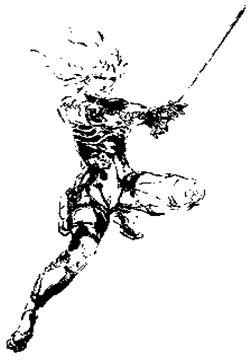
Before there was cleverness in videogames, there was cruelty. Metal Gear Solid 2 is a game made by Hideo Kojima, a man that doesn't like you. He doesn't you, he doesn't like his fans, he doesn't like making Metal Gear games over and over. He tried to quit a bunch of times, but then Japanese people rioted. He probably wanted to just produce games instead of directing, throw some good ideas at hungry developers so they could make things like Zone of the Enders (* * out of 4) or Castlevania: Lords of Shadow (* * * out of 4). He's an abstract and an "ideas man." He's too resentful to expect the player to understand his message when he speaks his mind within the context of a game. Kojima likes messing with people, offering a co-worker a handful of M&M's, and then laughing at them when they bit down on what were actually painted pebbles that he'd stayed up after lights-out to prepare. His is a character with no motivation -- he just does.

Whereas modern games actually plan on you discovering their gimmicks and secrets, probably at a designed-upon moment wherein you realize that this game is oh-so intelligent with its outlandish design, MGS2 is more of a drifter who is wise in his esoterica, burning down the Starbucks in every town he passes through. This game does not like chocolate chip cookies. This game is punk rock disguised as a Michael Bay movie. It's about an individual's overwrought sense of consumerist entitlement as much as it's about nuclear war -- and this is a videogame from 2001 that we're talking about. People have called it post-modern, but I think that's too broad of a definition. The original Metal Gear Solid on PS1 was already post-modern, which would make MGS2 a self-deconstruction, given its pronounced and purposeful similarity to its predecessor. It comes from a legacy and it knows it's famous. The original Metal Gear Solid made people sit up straight in their chairs in awe that a game could be about conspiracies and nuclear proliferation and real fuckin' guns firing real fuckin' bullets, all while still undoubtedly being a videogame in the same way that The Legend of Zelda was a videogame.

Kojima himself really did design a vast majority of MGS (source: The Game's Ending Credits), programming the enemy pathing, scripting boss patterns, and still writing and direction the abundant story. It was his. He had made this videogame and people played it, and they loved it madly. He had made so many people into videogame fans. Then he wondered if that was a good thing. Maybe he wondered if he'd been too clever, maybe he wondered if he hadn't been clever enough, but in the end, somebody had done a bad thing with MGS, simulating a one-man army sneaking into an Alaskan military base to thwart terrorists that were threatening innocents with a weapon as expansive and complex as nukes. The content was too serious for a media format like a videogame. It broke the fourth wall and established the player-character as an actual person, putting who was in control -- the player, the designer, or the character -- into question. Control and character would become major themes in MGS2. The videogame was becoming a squirmy art-form right before his eyes, and the battle-lines hadn't been drawn yet. Kojima wondered if people actually understood what they were interfacing with. He wondered if they could grasp the gravitas of such intricate, murderous role-playing.

The game was a success. It, along with Final Fantasy VII, helped establish the PS1's front-line. So how does an ego-maniacal idiot-savant like Kojima follow that up? How does he follow up Psycho Mantis? How does he follow up Revolver Ocelot's torture machine? How does he follow up Decoy Octopus, a boss hidden so deftly in his game that not everybody realized they fought and killed him during the first twenty minutes? How does one top that act? By doing the most punk rock thing imaginable. By nose-diving into his sophomore slump on purpose. By knowing his audience's expectations and doing almost the exact opposite. He knew he had one of the biggest audiences imaginable and that most everybody that would be buying MGS2 would have played, owned, or maybe even beaten MGS, and they were expecting big things for the sequel on the powerhouse PS2. Seriously, in 2000, a lot of people looked at the Dreamcast, and then looked at the preview build of MGS2, and instantly, a choir of angels descended from heaven to administer them God-sanctioned laser-eye surgery. It was no contest. Whatever was under the PS2's hood was lookin' pretty, pretty, pretty good, and all those kids suddenly recalled the rumors they'd heard from their friends with PS1's about how chocolate pudding-fantastic MGS was, which was that game with the robot ninja and nikita missiles that you could steer yourself.

PlayStation 2 it was. Sorry, Dreamcast. And the world waited with baited breath for the next generation.

Then 9/11 happened. It shouldn't be underestimated how much the real-life terrorist attacks soured people's feelings towards MGS2, a game about, hey, would ya know it, terrorists in New York. Or even worse, we were sure there were terrorists in the game, but we weren't sure what the game was actually about. It was murky as hell on purpose, all to make a statement about informational deception. MGS2 is not a cheerful game. It purposefully begins wholesome and familiar enough, barely informing you on how to operate old, familiar, Solid Snake, and it's business as usual, but it slowly drills down into the misery of modern American culture and how the government has been lying to us for decades. Yes, it's as jarring and hackneyed as that sentence. It had a labyrinthine plot laced with gray-shaded philosophical babble. Kojima always intended for the game to insult the player and nobody was in any mood to face an ironic videogame in October, 2001, especially when they were expecting Real American Hero Solid Snake to be kickin' bitches and slappin' robots.

Ah, yes, the Raiden twist. You are Raiden when you play MGS2, even during the parts where you control Snake during the initial Tanker-sequence that begins the game. You are Raiden. All of us are Raiden. Everybody that played MGS was Raiden and everybody that plays videogames is Raiden, at least as far as Kojima is concerned. And Raiden is not a very cool guy.

Snake is a cool guy. He prevented nuclear holocaust. He has a gruff voice and is named after a Kurt Russell character. He smokes. Smoking is "a move" that you can do when playing as Solid Snake. Raiden is none of those things. Raiden is an ignorant and androgynous bitch-whipped sucker. He limps through a a kabuki-theater plot surrounded by characters that act with as much enthusiasm as an underpaid babysitter wielding a Power Rangers action figure in one hand and a AT&T family-plan smartphone in the other.

And it's all on purpose. This is exactly what Kojima meant to happen. He saw his fanbase's desire to play as the iconic hero Snake and he saw an opportunity to twist it into a medium-defining moment. This is second-person storytelling. Remember earlier when I was talking about who was really in control, the player, the designer, or the character? No other storytelling form can do this.

It's simple. People use videogames as escapism, to simulate being a person greater and braver than ourselves. So what did Kojima do? He made a game where you get to play as a character trying to inhabit that role, but can't! You get to do it briefly, dabbling in the story's intrigue. You get to observe Solid Snake do his thang on occasion. But no, that stuff's going on outside of your control. When you take control of Raiden, you are talked through how things work by a patient military man, explaining your mission, how to walk, how to push a button, how to call your girlfriend on the phone, and this is all after you've infiltrated an US Marines' tanker not twenty minutes earlier. As Raiden, you are relegated to the back seat to make you learn that you are still playing a game, and when you're playing a game, you don't have the control you think you do. It's a harsh lesson. You, as Raiden, have to run through a plot of what is an admitted, deliberate simulation of the original Metal Gear Solid, which, in and of itself, was already a simulation of a Real American Hero stopping a terrorist attack. The illusion of control via the illusion of simulation. Only a videogame can do that. It attacks you for wanting to be guided through a simulation that you really have no control over, or even understand the reason for. And why, of all things, would you want to simulate this? What kind of sick psycho are you, choosing a narrow, digital, murder simulation? The story in MGS2 is a sad one. It's about us growing up, losing control, thinking we're doing good things, but we're puppets. We have no idea who to trust or who to depend on.

Kojima's stance on a sequel to MGS was: "Oh, what, you want another MGS game? Fuck you, you don't want another MGS game, and I'm gonna show you why. Because you, player, are a tool. A tool for me to manipulate. Defy me if you dare."

You (Raiden) trust your support characters blindly. You (Raiden) have your girlfriend leaning on your shoulder, giving vapid advice. You (Raiden) are a slave to a machine more complex than you could ever realize. You (Raiden) only become interesting when you become unlikable. Early on, Raiden encounters a man that looks and sounds exactly like Solid Snake -- who is supposedly dead, this man even admits it. Colonel Campbell, the voice in Raiden's ear, tells you not to trust this man that looks like Snake. But you know better. You've already identified with Snake. You trust Snake above all else. Immediately, you're put at unease, because you want to trust Campbell, but you know you should trust Snake, and that's when you first start to lose control of what you're doing. When Raiden comments that what's going on around him is a lot like The Shadow Moses incident of the first game, the supporting voices in his ear tell him not to worry about that, that, "This isn't a simulation, Raiden. It's real life," that's Kojima telling the player to be unsatisfied by this bullshit. The fact that the plot weaves Snake's presence, unaccounted variables that your supporting CO can't account for, is brilliant. Remember how Raiden is a doofy character with terrible dialog at first, and only the unaccounted variable characters like Snake, Olga, and Otacon, have decently-written parts and speak like actual people? That's because they exist outside of videogame conventions, and are free people, while Raiden (You) is just playing a part, doing as you're told. When it's revealed that Campbell was just an AI voice in your ear all along, and he tells you to stop playing the game, but you refuse, because fuck you, Old Man, that's you rising to Kojima's challenge to not obey authority, especially not a faceless game-designer. Once you've done this, you're ready to play the real game -- that game would exist elsewhere someday, and if Metal Gear Solid 3 (* * * * out of 4) had turned out to be terrible, then MGS2's joke wouldn't have worked, because with MGS3, Kojima proved that he could make a damn-fine game if he needed to.

It's the most important troll-job in videogame history. Kojima proved that he'd rather spend years of his life and millions of somebody else's dollars to tell a passive-aggressive joke about the state of a niche sector of the entertainment industry than let you play a cohesive videogame sequel to one of the most-revered games of all time. He designed a game that was deliberately as close to its predecessor as possible, but also deliberately not as good -- all to satisfy his own ego. It makes statements about sequels (they're shit), technological advancement (it's dangerous), entitlement (you aren't), and really new, interesting ideas (we're out of them, and we have been for a while).

MGS2 was a step towards the craziness that would eventually manifest in Metal Gear Solid 4: Guns of the Patriots, which is a towering monument to digital arts and crafts. The only problem with MGS2 is that it's not a very good game to actually play. Its design was clunky when it was released and it's aged horribly ten years later. The radar system is broken, there's no camera control, aiming is like digging yourself out of a snowbank with a bread knife, and the hand-to-hand combat is straight out of the 90's. It's important to note that that is not part of Kojima's joke. Rarely is a game so flawlessly built that it's actually about something, and still is fun to play.

The Nostalgianauts recommendation:
Revisit this game if it left a bad taste in your mouth all those years ago. A decade later, it's eerily prophetic, and even funny how much other games like Braid (* * * * out of 4) and Bioshock are playing catch-up with statements about player control (with some credit to System Shock 2, it's spiritual predecessor, but still). It sparked something philosophical in me when I first played it, even if I didn't quite understand why.

Nostalgianauts Rating: Was [WEIRD], Now [GREAT]!

* * *
(out of 4)

Recommended related reading:
[The Legend of Zelda: Majora's Mask | * * * ½] by Ghost Little
[ExciteTruck | * * * *] by Ghost Little
[Final Fantasy IX | * * * *] by Ghost Little


-- Alex Crumb
on Twitter | @GhostLittle_WTF

Wednesday, February 1, 2012

#56 -- The Plot, The Story, And The Expectation

"If you do it right, you can make the inquisitive ask questions, you can make the casuals come back, and you can make the professors lose sleep."

There is no such thing as zero-expectation. That probably makes some people happy. Heck, it's roughly 96% of what a marketing department does, fostering and metering expectations. If a marketing department is doing its job for a TV show or a movie, you're going in with familiarity about what's going to happen -- or what's supposed to happen. Elsewhere, if the storyteller is doing his or her job, they're aware of expectations, and while not necessarily playing up to those assumptions, they do not treat the crowd as a bubbling mug of stupid. The astute storyteller makes precipitous speculation a vital part of the story's existence and validation, using every tool, character trope, and twist on the norm that they can to accomplish this. This unsteady line-walking is a dangerous place to be, both creatively and financially. Either half could collapse the other if it's not handled with precise aplomb. I imagine every time somebody gets to minute-15 of a very expensive movie on release weekend and grumbles, "I have no goddamn clue what is happening," somebody in marketing is killed, and then probably hollowed out to be used as a pinata at the next Dia De Los Muertos party.

My father had that reaction while watching Inception. It's okay, he's probably smarter than me, and his brain knew to concentrate on more important things than figuring out if Christopher Nolan was creating a metaphor for movie-making via a shared-dream, idea-thievery, million dollar-grossing blockbuster.

"I liked the snowmobiles."

("Me too!")

Luckily (yes, luckily) you always have some familiarity and expectations because you are a human with a functional brain. You always know that, "This movie looks like something," and that you're familiar with that something. People know that there will be movies about robots, or romance, or mystery, or compelling moments in human history. People know that these things are ideas and stories are created by other people, or at least by the demi-humans hungry for mass-market appeal or prestigious awards. Regardless, you have basic expectations. That expectation will eventually become what the writer whittles a story out of. Even if a bizarre movie poster is all you have to go on, you'll think, "Looks confusing." And then you'll sit down in the theater, or fire up NetFlix, or whatever, expecting confusion. If somebody hands you a book, the book's potential contents are an extension of what you know about that person. Is it a person of taste that you trust? You'll expect good things, expectations perhaps altered and informed by what you know about their taste. Maybe Amazon recommends a book based on your prior purchases and shopping habits? After feeling a little intruded-upon, you give it a shot, curious if an analytical mouse-click algorithm could possibly be a good thing to identify your tendencies.

Even if you walked into a movie theater at random and sat down, not knowing what would come on the screen, you would still have a thought in the back of your head about how rebellious you are, flying blind, at which point, you're either attentive, anticipating surprise, or apathetic, expecting a bad movie. You come pre-packaged with expectations. We all start somewhere.

Expectations are part of fore-knowledge. Fore-knowledge is a collective pool of consciousness that a storyteller will tap into in order to draw an audience in. Take the familiar, arrange it, and then allow the story's characters and plot to drip into this mould. There is a library of ancient, universal storytelling templates that we share an understanding of and acknowledge, if not openly. These are the collective expectation. These are what storytellers inflict influence upon. On the one hand, you have the story. On the other, you have the characters, who must navigate that story and be as identifiable, and as convention-defying, as the understood fore-knowledge you've presupposed your audience will possess.

Logic suggests that you could begin with a something conventional, something easy, when crafting a story. Maybe it's a simple thing that could have its simplicity swept away by a tiny detail, yielding uniqueness. The most memorable:
A long, long time ago.
In a galaxy far, far away. . .
Those two sentences, standing blue against the black of space, blew a million minds. How could it be a long, long time ago, and in space? Why are we hearing about something so long ago? Because, there were Star Wars. Cue John Williams' score, and we're rolling.

Suddenly, audience expectation is heightened, and speculation begins, all because you showed them something ordinary, and then bent it. This ordinary thing could be a storytelling convention that's been altered, allowing "normal" people to be bumped around by some off-kilter world that might be just different enough. Consider the intro to X-Men -- a Jewish boy in a German concentration camp is separated from his mother, triggering an involuntary magnetic storm from inside his body. We know that this should not be real, and yet within some of the most disturbing moments in human history, perhaps there is in fact a story within a familiar plot. How is this event back in the 1940's going to change the modern times, which the movie quickly catches us up to? This is "plot" keeping up with "story," since we have people that embody safe conventions in semi-unique worlds and scenarios. The pace at which these details are metered out is often dependent on the medium. Take Harry Potter for example. For the first few books, it was very much a normal boy entering an amazing world. By the end the third book though, it's shifted, and the focus is more on character complications -- the magic is understood by the audience by then, and JK Rowling, demonstrating a great deal of growth as an author, smartly transferred the focus onto making the character-discovery just as fantastic as the magic, if not more so.

Alternatively, instead of a magical world or unusual circumstance, this "ordinary thing" being changed to run counter to audience-expectations could instead be an abnormal character, who is so compelling, that watching the entire world bounce off them becomes an insatiable, expectation-smashing experience. This is less common because it's harder to write and it's harder for an audience to connect with. Most people feel it's easier to identify with a tabula rasa, feeling that they can project themselves onto that character, deciding either yes or no, they could do well (or maybe even better) in an extreme circumstance that is so much more interesting than the mundane existence they inhabit. Note how that despite his wide appeal, many identify Batman as the least interesting character in Gotham City. He's smart and capable, true, but audiences are intrigued by a fairly particular character built out of right-angles and bullet-point commandments smashing into unpredictable, world-defining antagonism. Don't we all feel like the crazy world is against us normals? It's hard to have an identifiable, abnormal protagonist to have a good character arc without them becoming smug or predictable, especially on serialized TV. This is the reason why the hero is usually the straight-man and the sidekick is the wisecracking goofball. Connect with one, lazily, but actually adore the other. If the hero was the unique, world-defying personality, and he or she just kept doing good every week, only in an engaging, unorthodox manner with a pinball-vocabulary, then they aren't compelling or surprising or unique. If they suddenly lose their edge, and go off-script, off-expectation, then they're just a real-world asshole.

This is why normal people occupying weird worlds are the go-to for day-to-day television. We all think the world hates us -- why not give it a face that can be punched every week and a plausible, power-fantasy protagonist that somehow embodies our shortcomings? Well, if you want to be smart, you don't allow yourself to be satisfied with that. Be a tad more unpredictable. Let expectation of story fuel speculation about how a character will navigate the story's world.

In order to balance these things though, it comes back to audience. What do they know (about story)? What are they sure of (in the world)? What do they expect (of the characters)? Perhaps the most fun: what have they heard rumor and speculation of? How can these familiar threads be re-woven to make for compelling entertainment?

We can drill down into a few examples:

Alias is a show that did a lot with very little, but overstayed its welcome. Its characters and world had their arcs in the first two seasons, and creatively, it should have just ended. It tried a time-jump but only succeeded in a shark-jump. Observe Battlestar Galactica as a reference on how to do an end-of-season time-jump properly. Battlestar's world changed, the plot changed, the characters changed -- everything was altered. When Alias did it at the end of season 2, the audience was left behind in the past with main protagonist Sydney, a character that had trouble catching up with the plot that had progressed beyond her, and not in a, "Now the character will be tested and really grow" kind of way. More in a, "People got sick of the protagonist becoming a self-pitying mess, so that was the season everybody stopped watching" kind of way. We were expecting the established mythology, which was startlingly creative with its pseudo-science and Cold War legend, to steer the characters. Unfortunately, this plot couldn't be sustained, becoming much too convoluted and predictably outlandish, and the characters died on the vine.

Lost is a show that proves speculation alone is not fun, especially when "It" could be anything. Once we "knew" the characters, they lost (hah!) appeal. What began as people with baggage + haunted island + survival urgency became time-paradoxes and Cold War-era (again, JJ Abrams and his Cold War) grudges colliding with shape-shifting Egyptian blood-feuds. It began to become self-obsessed and delusional after the middle of the third season, insisting that a journey through throw-away weirdness with stubborn character archetypes was indeed interesting. It wasn't. The story stagnated, and the characters weren't strong enough to make standing around enough fun.

Batman Begins is a movie that capitalizes on sixty years of impossibility, and makes explaining away ancient implausibility compelling storytelling. The audience comes pretty well-armed to this one. Most everybody knows that a guy named Batman fights crime, and if you're tuned in a little bit more, you'll agree that superheroes are equal parts stupid and crazy. Batman Begins does not argue against Batman's idealistic recklessness, and it smartly takes the intricate details of a well-off man's metered descent into vigilantism, making it into a recognizably realistic world where a recognizably realistic version of a human takes philosophy and revenge to destructive extremes.

Is it impossible that Batman can beat up a dozen guys? No, he's a man that we watched train for years to learn that skill. Is it impossible that he could have such resources and technology? No, his company manufactures this stuff, and he carefully made decoy purchases to defer attention. Is it impossible that he could drive the batmobile over a rooftop? No, he had building schematics stating it could hold the car's weight. We once felt that Batman, and perhaps superheroes in general, were entirely implausible, and armed with that expectation, an audience is ripe for manipulation, if it is executed correctly. This is a prime example of story influencing plot, influencing character.

Casino Royale is a movie that turns a myth into a man. Similar to Batman Begins because it's about an impossible demi-god like James Bond, this is an interesting case because it's a modernization with so much history, but it's Bond himself, and all of his recognizable habits and, *ahem*, conquests, that are most famous, and his individual stories are less-so. (How is he modernized? He's made human. That's an intriguing argument for humanity's increasing need to identify itself.) Nevertheless, Bond is a character whose myth can inhabit any sort of plot, and he'll traverse it with confidence, killing henchmen, seducing women, stopping the global crisis, and not even slowing his gait as he strides right into the next movie. Giving him a problem that he can't solve destroys audiences' expectation that the plot is inconsequential to Bond. He is given emotions this time, but no consistent outlet for them. He is given true fear, but that just makes his arrogance all the more dangerous. This suddenly-humanized character is suddenly-sympathetic at the end of the movie, all because the story, formerly meaningless in the Bond-universe, worked in tandem with the character, the plot, and the style. Casting him as a brutish sociopath that eventually reforms somewhat was a brilliant piece of visual language.

Once Upon A Time is a show that reminds us that story-worlds themselves are sometimes the most interesting characters -- so make them collide. This is the exact opposite of Casino Royale. The fairy tales, the very fables themselves, are the key characters. We've never known what Snow White likes. She spites a queen, lives with dwarves, and is revived by a kiss. End of story. We've never been told what Hansel and Gretel's main character motivations. They're kids lost in the woods that kill a witch. That's all. It's the stories, the plots, that are famous, and ready to be amalgamized. This show smashes these scenarios together, so damn familiar as they are, and then lets the character drama (mathematically-impossible, 108% schlock that it is) inhabit this recognizable, mashed-up world. The recognizable stories collide to create storytelling fission-reaction -- the resulting energy is a candy-coated, mass market-ready dram-opera that sells itself. It has speculation, variation, fallout, familiarity, and no real rules, letting our minds soak up the sucrose.

Seinfeld is a show that moved from people in a world full of nothing, to horrible people destroying the world around them, to a cultural touchstone unto the real world itself. The show is not self-recognizing until the very last episode, and that's why the last episode was flopped onto the ER waiting room floor with a big "DO NOT RESUSCITATE" sign pinned to it. The show turned on itself and for once, it ceased to be about Nothing -- it suddenly consequences, and it suddenly had a story, whereas before, it simply had characters, well aware that there was no real plot, but also never looking directly into the camera and acknowledging it. We weren't expecting that -- I don't think Larry David intended it to be funny when he wrote it either. Most interestingly, Seinfeld became one of the first modern comedies to become canonized in the popular culture pantheon, meaning that if a new show lacks true purpose and focuses on character neuroses rather than them progressing as humans (because by the end of Seinfeld, they were so far beyond human, which is why they had to go to jail) then the audience will be able to say, "Oh, so it's like Seinfeld. Just less funny." 

A good modern comparison would be It's Always Sunny In Philadelphia, which has followed an almost identical tonal arc of fairly-human characters coming across the bizarre, and then eventually the characters become the malevolent, primary inflictors of plot on a world that seems increasingly more sane by comparison.

Mad Men is a show that enshrines America's cultural turbulence. The good and the bad. If you have a decent awareness of American history, you can observe this as characters passing through an era that was both clinically superficial and startlingly private. The rocket-age was optimistic because fear would surrender a Cold War foothold to the Reds, so cultural progress was frequent and rapid -- a good time to stage a period drama. As I mentioned earlier, humanity is increasingly interested in discovering itself, so to frame a plot, containing the characters, within a time-period where we expect there to be more going on in these lives than they'd like us to know. It's not a terribly unpredictable world, so the show's writers inflict some chaos on the situation with good-humored style, like when a linchpin character gets his foot shredded by a lawmower at an office party (spoilers?). The way Mad Men handles something as solid as recent-American history and shows how it will morph the characters, who are in turn trying to morph the American psyche as ad agency pitch-men, and then subsequently, the plot that contains the characters within this epoch, is all very exemplary historical fiction storytelling. 

So knowing what we know about history, a constant, we can guess how that history will change the plot, a variable.

If you do it right, you can make the inquisitive ask questions, you can make the casuals come back, and you can make the professors lose sleep. You can make the journalists write the dissenting op-eds weeks later, because that proves you're a presence in their heads. You can make worlds collide or stop them from turning altogether, and people would divide into sides, agreeing that either would be entertaining, but there is only one right answer -- theirs! You can make people lose faith, for just a moment, on purpose, and then give back the audience's terra firma at the exact right second. If you do it right, people will think that they can outsmart you, and that you want them to, and you'd be so damn happy if they stood a chance.

Maybe they do.

-- Alex Crumb
. . .follow the person on Twitter

Recommended related reading:
[The 10 Types Of Bombast In Storytelling] by Ghost Little and Doberman

Wednesday, January 4, 2012

#52 -- Digital Narratives For Humans

"In this case, organizing our media and newness has become a meta-game -- syncing playlists, charging devices, organizing and filtering newsfeeds. It's not part of what we would consider 'entertainment' or 'media,' but you cannot argue that it's a part of it. . . Our brains are playing extra games to compress all of this data."

Imagine a hay wagon on a dirt road alongside some train tracks. Now imagine a Japanese bullet-train speeds by.

They were right next to each other for half a moment. Not anymore though. The hay wagon's driver caught a glimpse of somebody on the train but he doesn't think much about it, he can barely tell them apart by now, all these trains come by here all the time, another is already cresting the horizon, in fact. Maybe the next one will be different, or important -- maybe he'll even be able notice. Nevertheless, these passing trains are sleek and beautiful and they at least break up the monotony of rolling down this dirt road.

Why can't we process every event that speeds by? Are they too fast or are we too slow? What story are we afraid of missing? How do we keep a narrative moving at the speed of human cognition?

Compensating to a storytelling format, bending its restrictions and disadvantages until they become net-positives, is an admirable ability, one that we don't give enough credit. It's a complex mixture compounded from understanding an audience, tempering their expectations, maintaining interest inside the narrative -- and outside the narrative if it's TV show on the air week by week in a universe where Internet message boards and Twitter exist -- all while remaining consistent and insistent that the story is worth it. There are plots in serialized TV shows that don't have a planned ending.

Stephen King would applaud that because he's a writer that enjoys scaring himself by what comes out of his own brain as he writes, be it robotic wolves dressed like Doctor Doom or a shapeshifter that can change between looking like a clown and a gargantuan sewer-scurrying spider. He was (is) a writer in it for the self-discovery. Imagine his surprise when he was putting the finishing touches on Wolves of the Calla and realized it was the weirdest version of the Seven Samurai story since A Bug's Life.

Christopher Nolan would not applaud that because he likes stories that are wound like Swiss watches, containing reflective, driving purpose in beginning, middle and end. If you asked him what his favorite book is, he would probably say that mankind has not yet written it yet. If you asked him again, he'd throw out the title From Russia With Love, and tell you to get the fuck out of his face in the most reserved, British way imaginable.

With free time, imagination, and maturation, it took us years to comprehend the layered meanings in an expansive chapter book, so many characters that we can't see visually, but feel vividly speeding and strutting around inside our heads, and now that the speed of personal imagination has become outdated, where the hell are we supposed to find correct pacing in our modern, digital, faster-than-brains society? How can we keep these things from just speeding by? How do we keep ourselves from missing it?

There are news stories that are better-paced serials than than a lot of TV shows, and they're easier and cheaper to produce, sickeningly. A person needs to understand how an audience takes in what's being put to paper or to stage or to screen or to controller because no story exists in a vacuum because they are written by people with lives and perspectives, and tastes in music, and bus routes home from work that repeatedly break down. We suppose this means that we subscribe to a modernist deconstruction theory on deriving meaning in stories. This means the playwright and the news-station producer have not only plans for the product being plonked up there for the masses to observe, but they also have their own personal motivations worming their way into the story, sometimes involuntarily, sometimes violently. Then again, one of them is meant to be entertaining, the other isn't. Not all written, dramatic stories actually mean anything and then that means the storyteller is either being pompous, or is in denial, or is being spiteful of their medium and ought to tread carefully in that post-modern swamp or they'll soon realize they've gotten their heads little too far up their collective ass.

We are striding right past a notable fulcrum, ironically or not, and we can now absorb media content faster than we care to acknowledge. We have smartphones and iPads and 4G LTE and DirecTV and NetFlix Instant. It's division. Finding focus is becoming less voluntary when shiny objects and limitless content are involved.

Not saying that NetFlix Instant isn't a gold-dipped God-gift, but when we're this spoiled for choice, where should we start?

We find it harder than ever to give time and to acknowledge that it can become an overwhelming sensation. We often don't have time to acknowledge it -- there's something new to do. There's something new to see or to hear or to contemplate, except if you move to Vermont and drive a snowplow for a living. These things might not be better, it might not even be good, but it is new. New makes money. New sustains art. New is regenerative, it's new skin and fresh coffee, and it needs to happen. New keeps us from dying a little bit every day.

The Speed of New has accelerated past the point where humans can safely comprehend it all. We cannot even spot all the new bits in the New as it blurs past us. New outruns Purpose. Anybody that's read a cyberpunk novel will tell you that if there is no memory of something, then it has lost meaning, and it has lost purpose. Information and media delivery has continued to speed up beyond -- we aren't biologically wired to move this quickly. It'll be hard to craft human memories from the hours and days that are filled with so much information fed into us at inhuman speed.

So is any of it worth it then? It must be. If we remember it, it is. Perhaps, amidst the overflow, if something can cling, then it must be powerful.

Again, it's the matter of choice and focus. Drawing human attention has become such a measured and calculated chemical exercise that we have become so familiar with that we've become less aware of its presence and more aware of its absence, like an amicable addiction. Fast has accelerated past Need. There's so much New that we need to find ways to cram it all in. This has created a meta-game. A meta-game is when formerly-rote organization within an activity becomes a chess-match in and unto itself. Calling time-outs and icing a kicker in a football game is a meta-game, for example -- it isn't technically part of the football "game," but it's another peripheral operation that's relevant while being seemingly-unrelated. In this case, organizing our media and newness has become a meta-game -- syncing playlists, charging devices, organizing and filtering newsfeeds. It's not part of what we would consider "entertainment" or "media," but you cannot argue that it's a part of it.

Our brains are playing extra games to compress all of this data. Who is the winner here?

In short, we suppose that our media intake is inconsistently-paced. We could miss the memory and we could lose the powerful. It's becoming dangerous and it's becoming scary the further you step away, realizing this thing is an impressionist work of art coming into disturbing focus.

Now is a time where the truth is more more omnipresent and untrustworthy than ever. A story moves faster than we can even process when it hits the Web and before it can become idolized myth, before it can become more than a shapeless mass, before it can become powerful, it becomes punctured and punctuated -- deflated and finite. A 24-hour news cycle is more curse than blessing, a network that shows only news is a business model that has overextended its grasp, violating moral truths in favor of erecting a sustainable financial construct. The private newsfeeds, let's take Reddit as an example, is even faster. A hulking biomass that eats human-interest pieces and shits nihilism, it is the vocal minority swaying in a liquid inertia. As entertainment, it's the Marxist dream realized, and it beautiful. Unbound by a desire and a necessity to make money, Reddit moves too quickly for its own good, letting a myth live for a week or so before being declared "Old."

Old < New, for obvious reasons. Old is done and gone. How forward thinking. Time is relative and websites like Reddit move out of sync with the human day-night-cycle. Reddit is the seed of a good thing and a scary thing. It's simultaneously juvenile and well-minded, like a young adventurer looking for trouble in all the wrong places. It's fascinated with New -- they even have guys to promote New content -- but how can we correctly learn from the past when New is the most important thing? How can we harness that ambition to serve humanity, an entity that moves so much slower than Newness?

Imagine cultural watershed moments like 9/11 in a 24-hour news cycle era. There's no argument that 9/11 invented the 24-hour news cycle, CNN was just a bunch of basic cable nerds with a solution in search of a problem before the attacks. Imagine the terabytes of high-definition cameraphone footage that would've hit -- its weight would have cracked YouTube in half.

Imagine a culture-altering person like Rosa Parks in a 24-hour news cycle era. How quickly would her actions' validity been questioned? How many hours before she was booked on talk shows, how many hours before the psychiatrist on retainer debunked her as a fraud, how many hours before her living face, flattened up on half a billion newsfeeds, became an icon associated with lazy whiners? Or even worse, there would be a few hundred cases just like Rosa Parks, and the Birmingham Bus Line would release a blanket statement about how they're addressing the issue. Or not.

It's unlikely that networks, be it Fox News or MSNBC, spin every single one of these things on purpose. A lot of it is a mixture of habit, Stockholm Syndrome, self-obsession, and hedgehoging -- curl into a ball, project your spines outward, and don't even let anybody close.

There are a great deal of people that command attention, and right fully so -- and then there are noisemakers that make a racket in the interim. They are equivalent to pouty, spherical children that if they didn't have their lunch made exactly as they specified, they'd have violent, verbal diarrhea, shouting at anybody with the politeness to not tell them to shut their shaking cruller-holes. These are people that are dissolving their right to speak -- their personae are soluble.

These are digital narratives for analog humans. A digital narrative has no speed limit. Analog humans will always be analog. If we cease to be analog, then we are no longer human.

Recommended related reading:


-- Alex Crumb
on Twitter | @GhostLittle_WTF

Wednesday, December 7, 2011

#49 -- The Top 10 Best And Worst Characters On TV In 2011

ONE THING TO NOTE: A more complete version of this article, and all of our other reviews, can be found on our new official site: http://www.ghostlittle.com/


"The gold-smeared half-Gollum / half-Joker steals every scene he’s in and reminds us why Robert Carlyle is a Secret Genius. . . look, if the show is a critical darling and beloved by its zealous fans, and the other Thursday comedies around it do well, maybe your problem isn’t with the show, NBC, it’s probably with your marketing department."

The Top 10 Best Characters of 2011

1) Tyrion Lannister, Game of Thrones -- Do you want me to go into this? Okay, but first, you need to go slam your hand in a hot oven door if you need to have Tyrion, and all of his glory, explained to you. Tyrion, the charming playboy-dwarf of the Lannister clan -- who are kinda / sorta the bad guys as of now in Game of Thrones -- is the closest thing to an audience-surrogate we have on the show. But at the same time, not at all. The other characters assume Tyrion is just a casual observer while he secretly is a silver-tongued political-acrobat that navigates all this mixed-up monarchy motherfuckery with such aplomb that we will willingly worship his snarky one-liners on bended knee. When your parents ask you what hip TV shows they should be watching, tell them Game of Thrones. When they ask you why, don’t mention the snow-zombies or dragons, just mention the Emmy-winning little person.

Hail, Dinklage the victor!

2) Ron Swanson, Parks and Recreation -- He can't clip his toenails. They're too strong. He has to use a metal file. He once ordered "all the eggs and all the bacon" a restaurant had when his steak proved inadequate. Ron does not consider fish to be meat, it’s practically a vegetable. He survived a gunshot to the head. Normally, burritos are too ethnic of a food for him to eat, but he was persuaded to eat one once because it was called "The Meat Tornado." The fact that The Meat Tornado once killed a guy was just icing on the cake. In Ron Swanson’s mind, there are no curse-words, except for one: "taxes." He was born ready and he knows that old wooden sailing ships are beautiful.

3) Abed Nadir, Community -- Community probably began life as a Joel McHale vehicle (Did it? I know Joel is a huge fan of the site, so if you can comment, Joel, please do!), but McHale's Zen-narcissism and hyper-snark didn't draw me in at first -- no, for me, it was Community's meta-icon, Abed. Abed may or may not know he’s on a sitcom in the best way possible, continually commenting on how their show-world is, well, like a TV show. Acting simultaneously as the level-headed judicator and quote-spouting madman, he dresses up like Batman, a xenomorph, Clint Eastwood, and Jesus, among others, and he finds his place in the show as the beating nerd-heart inside all of us. Some think he has mild Asperger's, but in reality, he's completely un-diagnosable. Abed, don't change. NBC, don't cancel the show.

#SixSeasonsAndAMovie

4) Daryl Dixon, The Walking Dead -- Since all the other characters on the show are self-pitying, neurotic, desperate, or depressed, it didn't take long to chose the best character on AMC's zombie-walker-drama. Daryl has developed into the character that has people saying, "That’s exactly what I would have done if I had a crossbow and there were zombies walkers everywhere." Increasingly humanized and always resourceful, he’s the second person on this list that’s been shot in the head and survived, and therefore your arguments against him being the best character on the show are invalid.

5) Frank Reynolds, It's Always Sunny In Philadelphia – Did you ever have a friend that was a terrible influence on people that were already kind of awful? Maybe somebody's dad that would buy you wooden crate of fireworks after dismissing your bottle rockets as inadequate? Frank Reynolds is the devil that sits on the devil’s shoulder, adding even worse ideas into the Gang’s plans on Always Sunny, corrupting the already pitiable Charlie even further. Frank once combined food and booze into one item when he invented rum-ham, which is exactly what it sounds like, and his hair has been getting increasingly psychotic-looking, probably signifying how many times he has cheated death. If only every sitcom has a character like Frank that could take terrible ideas and make them evil. Earth would be better for it.

6) Gus Fring, Breaking Bad -- The best character on arguably the best drama on the air right now. (SPOILERS): Gus is a fantastic villain. He's probably killed more people than he's spoken complete sentences and he has a Terminator-caliber clairvoyance to sense threats against him. Despite being physically unimposing, he is entirely fearless, killing a Mexican drug cartel's leader with poisoned tequila (which he himself later vomited back up (like ya do (like a BAUS!!)) over a territory dispute. If you've seen the season 4 finale, then you, like me, probably shouted: "How did he live through that?!" at the TV. He is a drug-dealing, fried-chicken shilling, vegan mega-murderer, and therefore, he is on the list.

7) Snow White / Mary Margaret Blanchard, Once Upon A Time -- Basically, this show is about Snow White’s baby being put in a magic cupboard to avoid an evil queen’s curse that sends the fairytale kingdom to a horrible town called Storybrooke, and the baby avoids the curse and grows up in Phoenix, AZ, and the baby has a baby, and that baby is adopted by the evil queen’s evil alternate-reality manifestation in. . . Maine? Is the show about amnesia? Or magic? Look, I missed the pilot episode and I’m still enjoying the bejeezus out of this show.

Once Upon A Time is drinkable yogurt. It's schlock and adorable and rarely dull, but the best character is the schoolteacher / princess-rogue Snow White. Played as a nervous pixie in the real world and a troll-slaying huntress in the fairytale flashbacks, she has believable chemistry with every other character and a desperately-charming love story that anybody with a beating heart will root for. #CharmingAndSnowFTW

8) Rumpelstiltskin / Mister Gold, Once Upon A Time -- The gold-smeared half-Gollum / half-Joker steals every scene he's in and reminds us why Robert Carlyle is a Secret Genius. This show is run by some Lost alumni, which means there are going to be some oily creepers manipulating things in the background, and the downright frightening Rumpelstiltskin chooses to operate in plain view because he has things people need. He’s evil to the heroes’ faces and they just have to deal with it, the mark of a great villain (see: Iago, 'Othello'). With an unclear motive outside of greed and narcissism, Rumpelstiltskin, and his real-world alter-ego Mr. Gold, are fast-tracked for wicked success.

9) Jess (New Girl) and Jess (True Blood) -- Whereas other sites would insist that one of these Jesses is bestest, we don't. They're both equally-good. Zooey D's Jess Day validates New Girl's existence, making nervous goofiness charming, and making "adorkable" a word. On the darker side, there's Jess Hamby, who I want to give the Most-Improved Award, beginning life as an obnoxious vampire prodigy on True Blood before developing into the only good character in all of season 4's mudfucking witch-shit. Also, I pity Deborah Ann Woll for having to weep blood constantly. It looks uncomfortable.

10) Roger Smith, American Dad! -- Seth MacFarlane gets a bad rap, deservedly so sometimes. That said, do not write-off American Dad!, his first post-Family Guyshow that has completely surpassed its predecessor, and the best character on the show is Roger, the gray, duck-footed alien that lives in the Smith family's attic. Roger possesses a Hobbesian (as in Calvin & Hobbes) quality to dress up in disguises that nobody but the family can see through, letting him walk freely out in the world. Hijinx ensue and there's not a Conway Twitty or cutaway gag to be found.

This is one of the strongest animated shows on TV, along with South Park and The Venture Bros., so if you happen to notice on [adult swim], give it a watch.


Top 10 Worst Characters of 2011

1) Baby Eric Northman, True Blood -- Grraaaaahhhhhh! Graaaaaaaaaaaahhhh!! No, no, no, no, no, no! Everything no, forever, no! And it was made even worse that they decided to restore his amnesia for the last two seconds of the season and. . . and, just, no. Look at the sentence you just made me write, Eric! No amount of decapitations or mockingly sucking blood out of a heart through a ventricle can redeem the fact that he was a complacent vampire-pup for the first twelve episodes of the season. Nice mesh shorts.

2) Prince Joffrey, Game of Thrones -- Nothing is crueler than a child, except maybe the King of Children. No, Prince King Joffrey is not a "bad character," in fact, he's effectively the most hated villain on television, but for the sake of the list, he gets plonked on the "worst" list. He's essentially what would happen if you gave your fifteen-year old brother the power over all life and death in a medieval kingdom, at which point, he cuts off your dad’s head and threatens your sister with bad sex. Joffrey coming into power is the sort of thing you dread happening, a wormy, over-entitled, emotionally-unstable, sycophant, and it shows Game of Thrones' courage to go with these consequences so deftly. I cannot wait to see this insufferable he-bitch get his comeuppance, but until then, we have YouTube clips.

3) The NBC Network heads failing to promote Community correctly, Network TV -- So, look, if the show is a critical darling and beloved by its zealous fans, and the other Thursday comedies around it do well, maybe your problem isn't with the show, NBC, it's probably with your marketing department. I'm going to use sarcastic, small words and mean-spirited back-talk to express how I feel about this, since that's apparently what the American public identifies most with:

Oh sure, great idea, NBC, you bunch of dummies. You'll probably eat salad with butter on it, because you are fat, and you have uncontrollable eating urges! Remember that painful memory when you were embarrassed?

God, I can't even do it. Fine, cancel Community. I don't want to live on this planet anymore, anyway.

4) Lori Grimes, The Walking Dead -- Morning-after pills don’t work like that, Lori.

Alright, we can go deeper on this. Lori, you messed up, you backpedaled, you want the world, but the world is dead. Lady, listen, if anybody, you should trust yourself to protect a newborn baby in the post-zombie walker world. She was fucking Shane after the plague showed up and now she’s whining about bringing a kid into the world? What did she think was going to happen? You're going to need kids in New Post-Apocalyptica. Lori wants to live in the old world (which may or may not be gone, she’s been tramping around in the Georgia back-woods for a few months) but can’t summon the wherewithal to adapt to her circumstances. Die, Lori, you cowardly, whiny, self-pitying butthole.

5) In general, The Simpsons -- Please, just let it die. I love The Simpsons to death, but I can't be weeping over its casket anymore. The show hasn't been funny since season 6, meaning there are more than 3 times as many bad episodes as there are good episodes. Also, the show has become a grinning corpse ever since it moved to the 4-act format. No half-hour show does this and this really needs to end.

6) Josh Shannon, Terra Nova -- I was tempted to put "Everybody" on Terra Nova, but I'm still holding out hope for this show. I've said on a few occasions that a show with dinosaurs, time-travel, and magical math painted on Cretaceous rocks should not suck, but somehow, Terra Nova sucks in the most uncomfortable ways, the greatest offender being Josh, the oldest child in the Shannon family. He's a whiner, he's a thief, he's disobedient, lazy, fashion-dead, and he pines over his ex-girlfriend when he has Skye Bone-Jumper right there in front of him. Characters like Josh are more dangerous than any level of violence on TV because kids watch this show and think, "I should be an angsty twat if my parents punish me for teasing the brachiosaurus."

At least the kids in Falling Skies know how to wield the steel. Josh, please, taunt a carnivore.

7) Whitney, Whitney -– Ah, Whitney. The biggest setback in feminism since Bella Swan. Whitney, on Whitney, a show about a woman named Whitney, a television program I've never seen, makes the list because every preview I've seen involve Whitney being cruel to her boyfriend (fiance? husband? anybody that cares to correct me should). What the hell? Seriously, it’s all "Whitney makes a blue balls joke while playing squash," or "Whitney emasculates her significant other by teasing him about his cooking," or "I'm skinny and snarky and people enjoy my brand of slightly acerbic comedy because men are doormats and I remind women of the mean, popular girl in high school that they wished they could've been friends with. Producer credit, bitches!"

I promise you, this woman is a maladjusted bully, and she's probably really insecure about her eyebrows.

8) Carl Grimes, The Walking Dead -- Kid, dude, look, I know you got shot, and a large animal vet had to operate on you, and the world is overrun by zombies walkers that want to masticate on your brains, but damn, you're creepy. Maybe it's the moon-burn skin or his deep voice or his gigantic hat. I dunno. The poor kid is going to remain a child forever at this rate -- he doesn't just have the only crazy parents left in the world, he has the only parents left in the world. Sooner or later, his death will be their fault, because they will never allow him to grow up, lest he become an adult and, you know, learn how to survive in a world the adults fucking created and also know nothing about.

9) The judges, and everybody involved with, The X-Factor -- Hey, The X-Factor, how does it feel to be associated with Pepsi?

Now that we have the nastiest insult on the Internet out of the way, The X-Factor is like the biggest open-mic night in the world, except a man, and a woman, and some other humanoid-homonculi get paid to shout things at these emotionally-vulnerable, amateur performing artists. And they televise it with almost zero overhead costs. That's lucrative, low-risk entertainment right there. Reality TV is never going to die, is it? Look, I got sort of drunk on Thanksgiving a few weeks ago, and was down to the last bottle of prosecco, and completely out of orange juice, and I started watching House Hunters International and I was reminded that these kinds of shows show us people in an unenviable and stressful moment in life, like buying a house, and I still find myself hating them! No other type of television elicits that visceral and contemptible of a reaction, and The X-Factor is the biggest offender.

Then I flipped over to Nat Geo and watched Rocket City Rednecks for a spell and slipped into a gravy-dream.

10) Daniel Tosh, Tosh.0 -- This fae pixie and his expanding wardrobe of loose tank-tops has successfully marketed YouTube comment-trolling and made a show out of him getting into a slap-fight with civility in front of a green screen. Did you know it's a more highly-rated show than The Daily Show? Yes, televised laughing at the Internet is more popular than the most important news satire ever.

Daniel Tosh, you think you're from the Internet? You think you've channeled the spirit of morbid Web-dementia? Bitch, please. You've never waded out of the YouTube kiddy pool. You're a Central-Florida basket case that ran away to LA, just like every other self-fellatiating coward thirsty for fame. Kids, I'm going to reveal a secret: Tosh isn't actually a racist, homophobic, sexist bigot that pushes "the comedy envelope" -- he's an American with an Internet connection.

He isn't a terrible person. He isn't daring. He isn't a voice. He isn't reprehensible or compelling or admirable or intelligent. He's an American with an Internet connection and a passive-aggressive longing for people to stare into his immortal soul. For money.

Recommended related reading:
[Saints Row: The Third | * * * ½] by Ghost Little
[Dark Souls | * * *] by Ghost Little and Doberman
[Vanquish | * * *] by Doberman and Ghost Little (in that order)


-- Alex Crumb
on Twitter | @GhostLittle_WTF